The machine performs a bounded operation. People prepare the conditions, handle exceptions and decide whether the result meets the hotel's standard.
Name the accountable roles
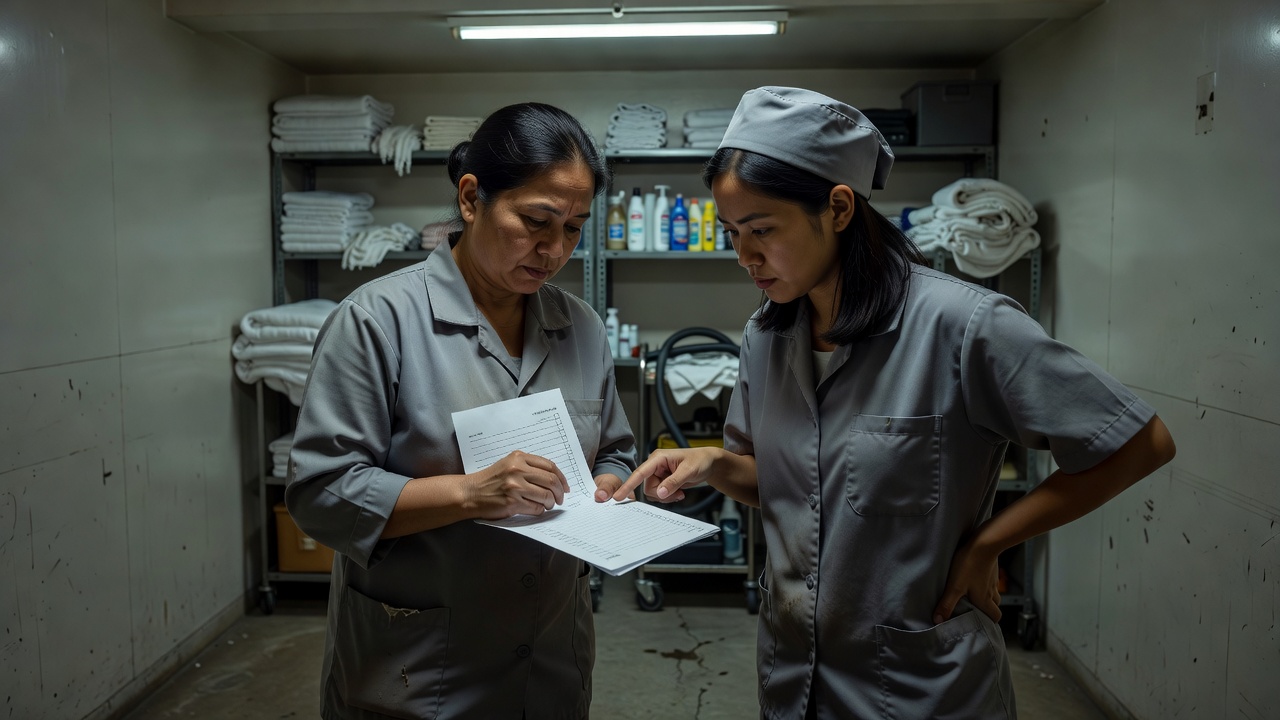
Assign four responsibilities before a trial: permission to start, preparation of the area, response during operation and acceptance after completion. One person may hold more than one responsibility, but each must be explicit for the actual shift. Avoid an arrangement in which everyone assumes another department is watching the machine.
The night manager may control guest-facing timing, housekeeping may own the cleaning standard and engineering may own a building interface. Write down how those roles interact. Engineering support does not replace a cleaning inspection, and a front-desk colleague should not be expected to perform technical recovery without training. Include an alternative contact for breaks and competing incidents.
Prepare a repeatable release
The preparation checklist should cover the machine and the environment. Staff verify consumables, visible damage, tank or bin condition, the correct route and the permitted operating window. They then check that access is suitable and that temporary hazards have been addressed. Use the manufacturer's instructions for all equipment-specific steps rather than improvising a generic start routine.
Keep the release decision separate from pressing Start. A machine can be technically ready while the corridor is unsuitable because a late group is arriving or a maintenance task is underway. Staff must be able to postpone a run without being treated as having failed an automation target. Successful deployment includes choosing not to operate when conditions are wrong.
Train for the interruption
A useful training session includes a normal start and several safe, controlled exceptions. Demonstrate the documented stop controls, how to identify the machine's state, whom to call and when a restart is inappropriate. Staff should know the difference between routine operator care and a repair that requires an authorised technician.
Practise scenarios without creating a real exposure: a route blocked by a trolley, an unavailable dock, a guest asking for quiet and a run that ends before coverage is complete. Ask the trainee to explain the next safe action and the handover record. Reading a dashboard is not enough if the person cannot protect the area or explain what remains uncleaned.
The US National Institute for Occupational Safety and Health publishes research on occupational robotics and worker safety. The Finnish Institute of Occupational Health also offers guidance on workload and workplace change. Use such resources to support a local assessment, not to imply that an individual deployment has received their approval.
Keep recovery practical
Specify who attends an alert and what happens if that person is already dealing with a guest incident. The safe fallback may be to leave the machine stopped in an approved position and finish the area manually later. It must not depend on a staff member rushing, lifting equipment unsafely or defeating a safety function.
Record exceptions using a short vocabulary the whole team understands: blocked route, surface issue, consumable issue, navigation fault, guest disturbance and incomplete coverage. Add a factual note where needed. Repeated minor interruptions can reveal that the schedule or task boundary is wrong even when no single event appears serious.
Do not turn operational logs into an undisclosed staff-monitoring system. Limit access, explain the purpose and avoid collecting more personal information than needed. Where records identify workers or guests, the General Data Protection Regulation and applicable employment rules need consideration. Involve the property's privacy and employment advisers rather than relying on a vendor dashboard's default settings.
Accept the result and close the shift
The inspector checks the agreed task outcome, including excluded edges that require manual work, any remaining debris and surface safety after wet cleaning. A completion notification is evidence to review, not automatic permission to release an area. If the job fails the standard, record rework and its cause rather than quietly absorbing it into the next person's workload.
At shift change, pass on the area, route version, final machine location, consumable condition, unresolved faults and outstanding cleaning. A person receiving the handover should be able to act without searching several applications. Use the hotel's existing shift record where possible so the robotic task does not create an isolated information channel.
Finally, review whether the new routine improves the work. Ask staff about interruptions, physical effort, confidence and competing responsibilities. If supervision is simply added to an already full shift, the apparent automation may be transferring work rather than reducing it. Keep the task only when the whole operating arrangement is acceptable.